

Reframing Glute Training as a Longevity Strategy


The glutes are one of the most important muscles for mobility and metabolic health. Gluteus maximus is the largest portion of the “glutes” and contributes to about 4% of total body muscle volume in active individuals.1 These muscles extend the hip, a motion crucial to walking, climbing stairs and rising from a chair. They are also highly insulin sensitive, making them a major site for glucose uptake and storage.2 While often trained for appearance, their real importance lies in how they power everyday movements and support metabolic health.
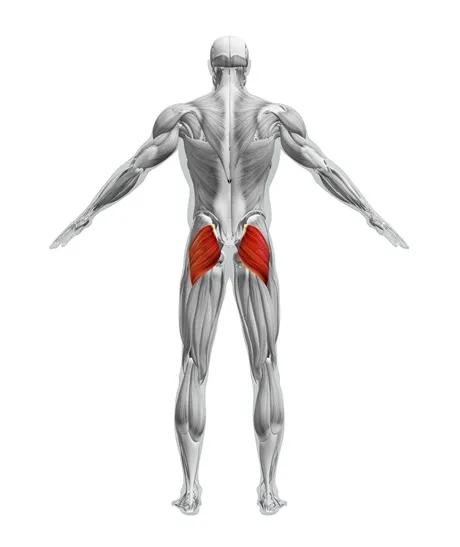
As glutes weaken, hip extension power drops, causing more load to the spine and knees in ways that increase the risk of pain and injury. The loss of glute strength signals a loss of functional capacity, making daily tasks feel harder. Metabolically, the loss of lower body mass reduces glucose disposal, worsening insulin sensitivity. These consequences have prompted researchers to treat glute size and shape as objective markers of metabolic health.
Research on Glute Shape
A large-scale imaging study examined how the three-dimensional shape of the gluteus maximus varies with age, activity, sedentary time, and type 2 diabetes. Rather than focusing only on muscle size, the researchers analyzed surface shape patterns across thousands of participants.
A clear trend emerged. Greater strength and physical activity were associated with outward expansion of the muscle surface, consistent with more contractile tissue, whereas aging, frailty, and prolonged sitting were linked to inward surface changes that suggest tissue loss.3
Interestingly, type 2 diabetes appeared differently in men and women.3 In men, diabetes was associated with gluteal flattening and inward changes that reflect atrophy and low muscle quality. In women, diabetes was associated with outward changes that appear to reflect fat accumulating within the muscle. The practical takeaway for fitness professionals is that loss of glute strength and size is associated with worse metabolic health, and for women, larger is not always better.
Facilities Need Practical Proxies
Most fitness facilities do not have access to advanced imaging, and they do not need it. What they need are repeatable, practical ways to track whether lower-body muscle tissue is being preserved or built over time. Facilities can encourage repeated strength assessments on equipment or movements that involve the glutes, and they may also consider non-invasive body composition assessments.
Bioelectrical impedance analysis (BIA) estimates how much of the body is made up of fat mass and fat-free mass by passing a small electrical current through the body. More advanced systems can also estimate lower-extremity lean mass, which serves as a reasonable proxy for changes driven by resistance training. BIA does not measure the glute muscle directly, but trends in lower body lean mass provide meaningful insight into whether training is supporting muscle growth or protecting muscle during weight loss.
Using BIA in a Muscle-Centered Way
When BIA is used only to track fat loss, its value is reduced to a single outcome. Its greater utility may be showing whether lean tissue is being preserved, gained, or lost. This distinction matters because weight loss usually includes a loss of muscle, and the extent to which this occurs reflects whether your members are resistance training and taking in enough protein.4
With repeated BIA measures, facilities can help to shift the conversation away from a member’s scale weight and toward tissue preservation and growth. This means that instead of asking about body weight, professionals can ask whether their members kept or built muscle, especially in the lower body. That framing aligns naturally with glute-focused training as a health and longevity strategy, not just appearance.
What This Means for Fitness Professionals
Glute training should be positioned as an investment in mobility, metabolic health, and resilience with age. Pairing repeated strength testing with body composition tools provides the ideal context, revealing whether the lower body is producing more force and whether it is increasing or being preserved over time. When combined with progressive resistance training, this approach helps members realize measurable gains in muscle and performance rather than appearance alone.

Karlie Intlekofer, PhD, CNC, CPT
References
- Riem et al. Big bones mean big muscles: An MRI-based dataset of muscle-bone-body size relationships across 70 human muscles of the upper limb, trunk, and lower limb. J Appl Physiol 2026; 140(1): 1-19.
- Intlekofer. Muscle strengthens blood sugar control. Available at: https://us.matrixfitness.com/eng/learning/post/muscle-strengthens-blood-sugar-control
- Thomas & Thanaj. Precision imaging of sex-specific adaptation in gluteus maximus morphology and type-2 diabetes: A large-scale MRI study. UK Biobank analysis in the Radiological Society of North America News Report.
- Rosero-Revelo et al. A predictive model for muscle mass loss in obesity: Validation of phase angle and fat-free mass as independent predictors. Clin Nutr ESPEN 2025; 70: 320-6.
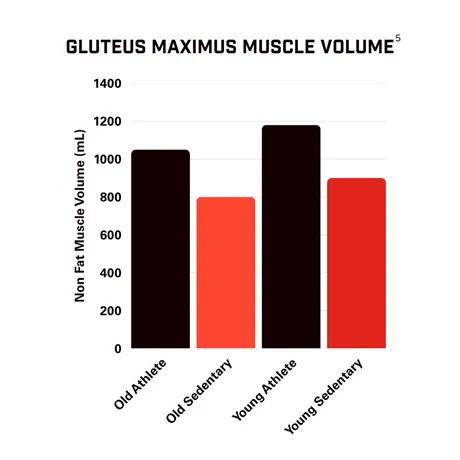
- Zange et al. Leg and hip muscle show muscle-specific effects of ageing and sport on muscle volume and fat fraction in male Masters athletes. J Physiol 2026; 604(2): 917-35. Composition-based proxy reflects values calculated as MRI muscle volume × (1 − fat fraction) to estimate the non-fat portion of the muscle in 25- and 65-year-old men.

